Levi Abbott - October 6th, 2026
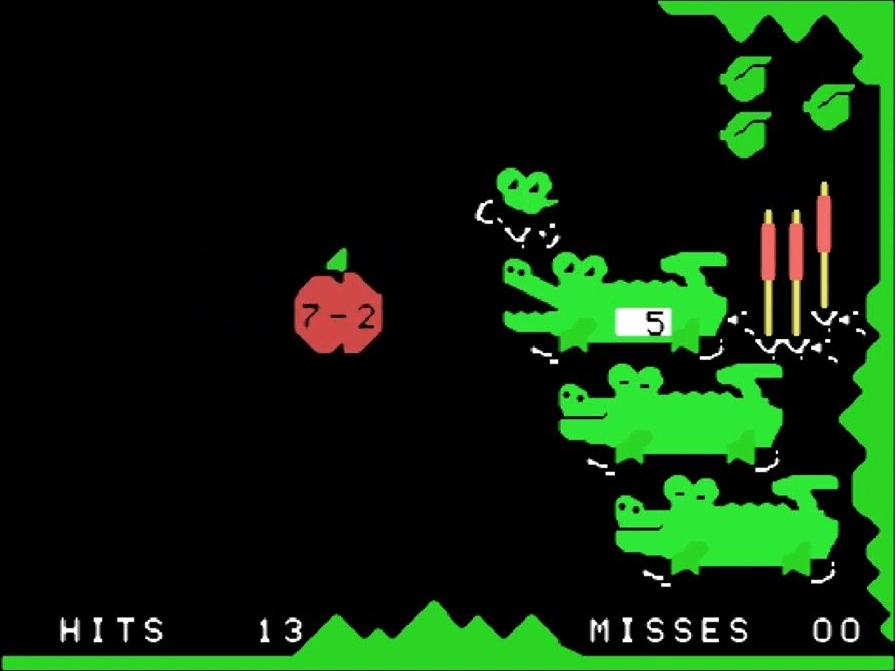
For anyone who has wondered, "How did the games on your Projects page begin?" Like all great stories, it begins, as they say, "A Long, Long Time Ago..."
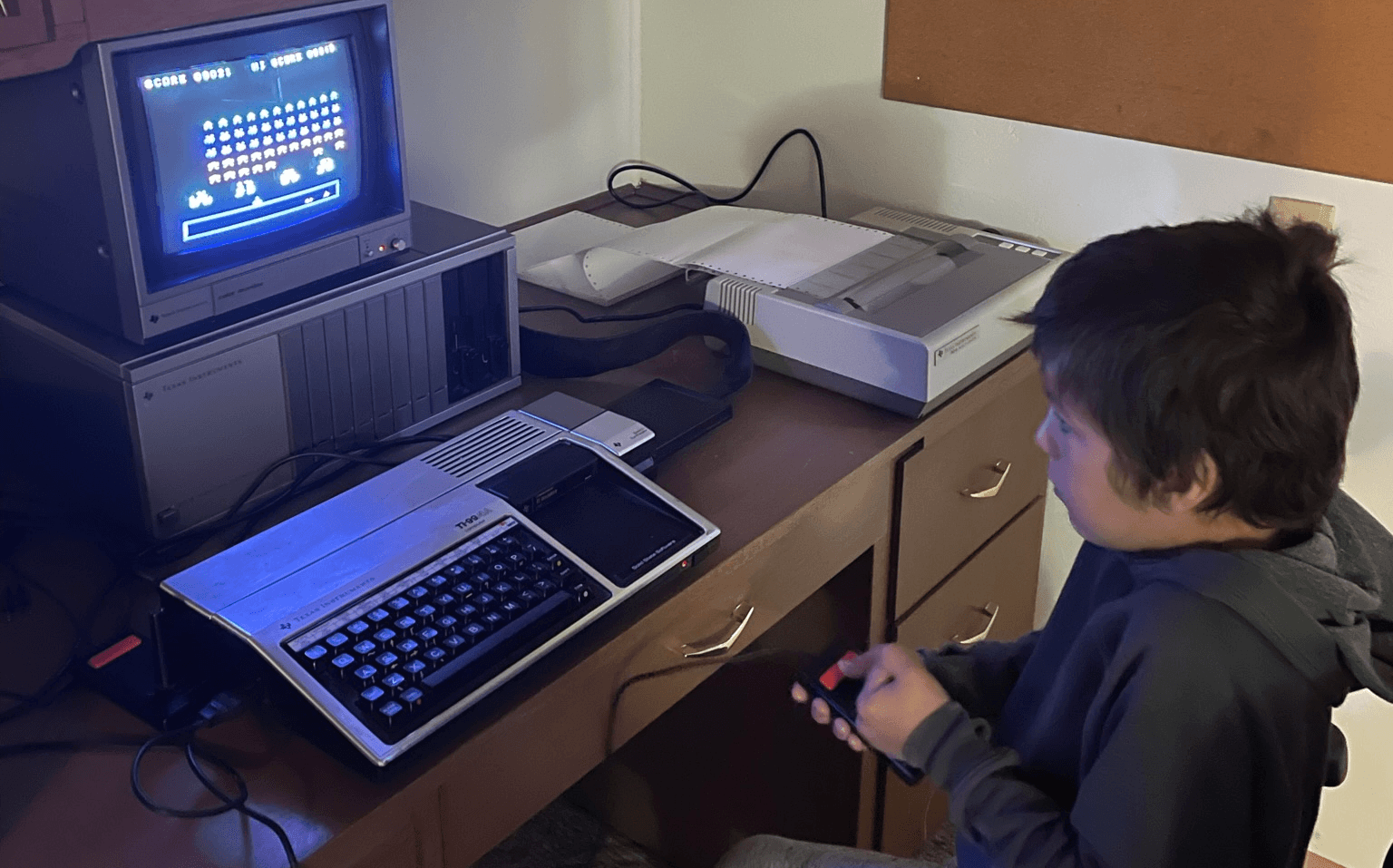
Way back in 1983, my father proudly brought home for me a TI-99/4A. At the time, it was cutting-edge technology. The first 16-bit home computers.
Essentially, it was a keyboard that you connected to the antenna screws of your television and, after tuning to Channel 3 or 4, turned on and loaded a BASIC interpreter—or, if you had inserted a solid-state software cartridge, a program such as a video game. In the beginning, I had two game cartridges. One was an educational math game, Alligator Mix. The premise was a hungry alligator in the swamp eating apples with addition and subtraction. Sound familiar? I loved that game and played it for hours and hours.
Fast-forward forty years, and I suddenly find myself married to a teacher who complains one day that educational software is terrible. According to her, educational software is online and either very expensive or filled with advertisements (often not really age-appropriate), sometimes both. Apparently—and this was according to her—it all requires logins and emails for each child, tracks them, collects data on her kids, doesn't really have much educational value, or attempts to replace the teacher.
And worst of all, it is super gamified to the point of being addictive. At least—and these were her words—"all her students" could literally have meltdowns when their allotted time on the school computers was at an end. And she just hated computers.
I listened to all of this, and it occurred to me that I could probably do something that didn't reside online, didn't have a cost, and had a modicum of game theory so it was mildly entertaining, but maybe not to the point of being compulsive or addictive. It would have a focus on practice, not teaching, and certainly wouldn't track children and exploit them for monetary advantage.
After all, I'm a clever chap, with a little experience with technology and some knowledge of coding. Why not see what I could do in the evenings and on weekends?
And so it began. I downloaded the free Code::Blocks IDE and MinGW G++ compiler. I sat down in front of my computer and thought. Then I thought some more. I sort of had nothing of an idea. and then I remembered my old TI-99/4A and Alligator Mix. My recollection was that was essentially what my wife had claimed she wanted in educational software. How hard could it be to kind of clone the game from memory. After all computers have come a very long way.
That TI-99/4A had a 16-bit processor, 256 bytes of RAM (yes that's bytes) and 12Kb of solid-state read only storage on the software cartridge.
 After some pencil work. I got down to coding, and after many months I had a working command line game (console app) that unfaithfully replicated the old game (minus color graphics, and sound). That worked on a modern Windows 11 computer with a 64-bit processor.
So go ahead and download my first effort, Gator. This is a .zip file, extract gator.exe and double-click the file to run.
If you are interested in programming games, download the C++ source code for my original console game. The code is in a .zip file. If using Code::Blocks and MinGW G++ just copy the files into a new console app project and add all the .h and .cpp files to the project. Then build and run the program. If you're using a different development environment or compiler on a Linux device, refer to the README. I have also included the three .txt files containing my beautiful original ASCII artwork as well.
But I'm not going to provide any support or teach programming. As a side note, this is still the basic game engine for Alligator Math, with quite a few additional lines of code on top.
 If I've given the impression that this was easy and effortless, I am also sharing my first mostly bug-free, working graphical version of Alligator Math. I got to this point in the development roughly six or seven months after I finished the console application game. Have fun and a few laughs with my effort and early artwork.
Enjoy! I hope someone has half as much fun playing Alligator Math as I have had creating it! Download Version 1.0 (.zip)